Mikitenko Gives Good Answers
Published in "Running Times" On-line. www.runningtimes.com
Irina Mikitenko (Germany) gave straight answers to some important questions at today's D-M Austrian Women's Run 5K in Vienna.
First, what shape is she in, after dropping out of the defense of her title at the Virgin London Marathon on April 25 with a calf injury? Mikitenko's answer in Vienna was to set a relentless pace from the gun. (In fact, the race is started by the melodious gong from the Viennese State Opera, preceded by five minutes of Strauss waltzes. Some years the elites waltz together as their final warm-up.) Mikitenko's first kilometer was 3:03 and the others were in the 3:06-3:08 range. Only Eloise Wellings could survive that pace beyond halfway, and Mikitenko surged away from the improving young Australian in the last kilometer, for a 15:39.4 victory. Wellings settled for 15:48.4, with Latvia's Jelena Prokupcuka, also on the come-back, third in 15:59.6.
So look for Mikitenko for sure and Prokupcuka probably to be prominent in the autumn marathon season.
Second question, can Mikitenko, after three years at the top of the world in the women's marathon, move back to the track 10,000, as she plans at this year's European Championships in Barcelona? No problem, on this form.
"I was worried that 5K is so short now, and I might not have the pace. So I needed to be in front. The rest I had to take while my injury recovered after London made me fresh, and today I felt strong and was happy with my speed at the finish when I moved away from Eloise," she told me, speaking in German (In the event she did not run in Barcelona).
Third, a much bigger question - why have elite women's marathon times been static for five years, while the men over the same period have totally rewritten their all-time top-twenty rankings? It's a question I asked in my overview of the 2010 Spring road- racing season in Running Times On-Line in May. Mikitenko, the only woman in those five years to break 2:20 and the fourth-fastest in history, gave the best answer I have heard.
"The African men all train in big groups, but most of the world's best women train alone, or sometimes with one man, a husband or coach. For the marathon, the experience of the big group is important, and it helps to raise your level" was Mikitenko's perceptive analysis.
Like many elite women, she has family responsibilities that make such group work impossible, with a husband and a teenage son, who were with her in Vienna, plus another child.
Jelena Prokupcuka had a different answer.
"Sometimes the women do not like a fast pace in the marathon. When I won New York for the second time, no other woman went with the pace-maker, even though my preference was not to have pace-makers. So in the last miles I was alone," she said. "But the faster times must come again soon"
Prokupcuka was happy with today's third place, as she is in the early stages of returning to full training after a period of pregnancy and the loss of her baby. Not its birth, as has been reported.
"That report is unfortunately not true," she and her husband Alex told me before today's race.
Now she is in the build-up phase of the basically Lydiard training that she and husband-coach Alexander Prokupcuk work to.
My post-race exchange with Wellings was to the point. "I thought until the last K that you were going to win," I said. "So did I," the Aussie replied with a wry laugh.
She had looked strong and springy, sitting on Mikitenko's shoulder for most of the distance. But she gave me an astute analysis of the effects of the pace, concluding that Mikitenko's blazing first kilometer had been decisive.
"I can be pretty quick now at the end. I've been working on it. If the first K had been 3:10 I might have won. But Irina kept throwing in these wicked surges, and the last one just knocked me off focus."
Note this name. An unexpected American featured in the top placings, Esther Erb, sixth in 17:11.4. Erb, 24, has been living in Austria for two years as a teacher on a Fulbright Fellowship. Originally from Richmond, VA, and currently associated with the Boston AA, Erb is on the edge of high honors as a runner. She brought her marathon time down from 2:46 to 2:39 at the Seville Marathon in February, taking a place in the USA's current top 20. Now, with her Fulbright due to end in June, she is looking at options for joining a coaching group in the US to fulfill her running potential.
"Some people here wanted me to take Austrian citizenship, which would mean I could easily qualify for the Olympics. But I want to be the best I can be, and stay with my American citizenship," Erb said.
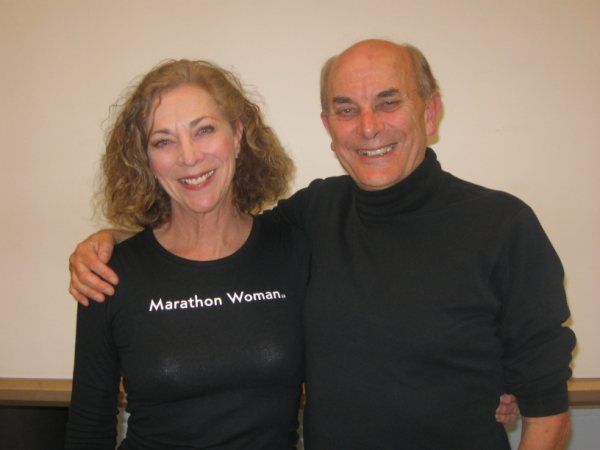
The top placers all concurred in praising the vibrant spirit of the Austrian Women's Run, which has grown into the biggest women's race in Europe. Prominent in the record 21,100 starters today was American Kathrine Switzer, who was honored as the race's inspiration by being given bib number 20,000.
More Articles appearing in Running Times Online
For more information about Roger The Speaker
For more information about Roger's Schedule
More from Running Articles
The first exploration of a neglected area, discovering that women ran distance races, even championships, much earlier than is usually believed.
Before Bikila: "Footsteps" column on the early history of African running.
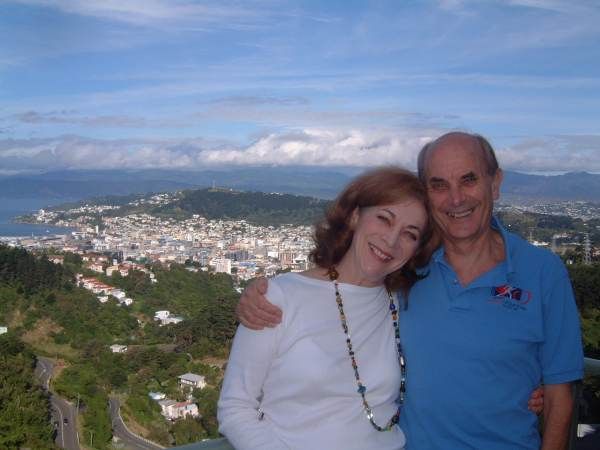
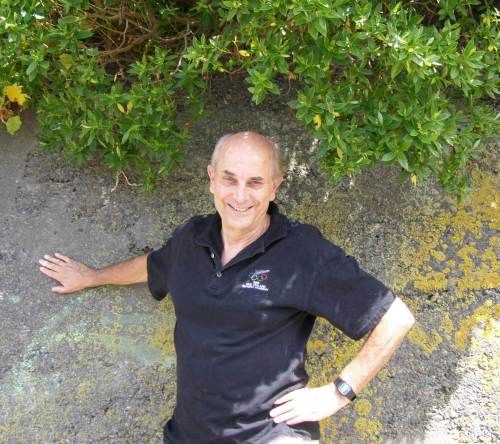
Roger Robinson in Vienna, Austria, May 30, 2010.
Roger Robinson at the New York Road Runners Mini Women's 10K in New York City. Saturday, June 12, 2010.